Can you save your hair during TCH chemotherapy?
Published: July 13, 2026
If you’re about to start TCH chemotherapy, one of the biggest questions on your mind may be whether you’ll lose your hair, and whether cold capping is worth trying.
Hair loss is one of the most visible side effects of chemotherapy. For many people, it affects far more than their appearance. It can impact confidence, privacy and emotional wellbeing at a time when you’re already coping with a cancer diagnosis.
People choose Penguin Cold Caps to help reduce chemotherapy-related hair loss during TCH treatment. While no scalp cooling system can guarantee you’ll keep all of your hair, cold capping may help some people retain more hair throughout treatment.
In this guide we’ll explain:
Thinking about saving your hair on chemo?
Cold capping is a system used by thousands of people to save their hair whilst undergoing chemotherapy treatment.
If you want to find out more, why not start by reading more about our clients’ experience of cold capping with Penguin.
Does cold capping work with TCH Chemotherapy?
One of the first questions people ask before starting treatment is:
“Does cold capping actually work with TCH?”
The answer is that many people choose cold capping to help reduce hair loss during TCH chemotherapy, although results vary from person to person.
Cold capping works by cooling the scalp before, during and after chemotherapy. This cooling reduces blood flow to the hair follicles and slows their activity, which may reduce the amount of chemotherapy reaching them.
Many people retain a significant amount of their hair during treatment, while others still experience noticeable shedding. Every person’s response is different.
Several factors influence how successful cold capping may be, including:
- your chemotherapy drugs
- how closely the cooling protocol is followed
- the fit of the cold cap
- your hair type and thickness
- individual response to treatment
The most helpful way to think about cold capping is as a way of reducing hair loss, rather than preventing it completely.
If you’re unsure whether scalp cooling is suitable for your treatment, speak with your oncology team before your first chemotherapy session.
What is TCH Chemotherapy?
TCH is one treatment option used for some people with HER2-positive breast cancer. It combines chemotherapy with targeted therapy to treat the breast cancer in different ways.
The TCH regimen consists of:
- Docetaxel (Taxotere®)
- Carboplatin
- Trastuzumab (Herceptin®)
Each medication plays a different role in treating the cancer.
- Docetaxel (Taxotere)
Docetaxel is a chemotherapy drug that prevents cancer cells from dividing and growing. Because chemotherapy targets rapidly dividing cells, it also affects other fast-growing cells in the body, including those within the hair follicles. - Carboplatin
Carboplatin is another chemotherapy drug. It works by damaging the DNA inside cancer cells, making it difficult for them to multiply and survive. - Trastuzumab (Herceptin)
Trastuzumab is a targeted therapy rather than a traditional chemotherapy drug. It targets HER2-positive cancer cells in a different way from chemotherapy, although it can still cause side effects and requires monitoring throughout treatment.
Some people receive a similar treatment called TCHP, which also includes Pertuzumab (Perjeta®). This article focuses specifically on the TCH regimen.
Many TCH treatment plans include six treatment cycles, usually given every three weeks. Some people continue receiving trastuzumab after the chemotherapy part of treatment has finished.
Your treatment schedule may be different, so always follow the plan recommended by your oncology team.
Why does TCH cause hair loss?
Hair loss during TCH chemotherapy is mainly linked to Docetaxel (Taxotere).
Chemotherapy works by attacking rapidly dividing cells. While this helps destroy cancer cells, it also affects other fast-growing cells throughout the body, including those responsible for producing new hair.
Without scalp cooling, many people receiving Docetaxel experience significant hair loss during treatment.
Hair loss may include:
- thinning hair
- increased shedding
- patchy hair loss
- complete loss of scalp hair
- thinning of eyebrows and eyelashes
Hair shedding often begins after the first or second chemotherapy treatment, although the timing varies from person to person.
For most people, chemotherapy-related hair loss is temporary. Hair usually begins to grow back after treatment has finished, although it may initially have a different texture or colour.
For many patients, reducing hair loss helps them feel more like themselves during treatment, which is one of the reasons they consider cold capping before their first chemotherapy session.
Why do so many people choose cold capping?
For many people, keeping their hair isn’t simply about appearance.
Hair can be an important part of identity, confidence and privacy. Some people want to maintain a sense of normality for themselves, while others prefer not to immediately reveal their diagnosis to colleagues, acquaintances or young children.
Many Penguin Cold Caps users tell us that preserving their hair helped them feel more in control during treatment and allowed them to focus on living their lives rather than constantly thinking about cancer.
Cold capping is a personal decision.
Some people decide it’s right for them, while others choose different ways of managing hair loss. There is no right or wrong choice, only the one that feels right for you.
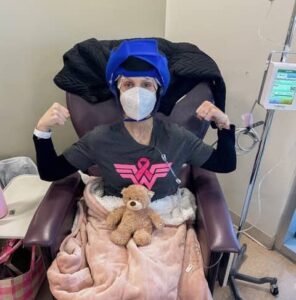
Valeria using a Penguin Cold Cap to protect her hair during chemotherapy treatment.
How do Penguin Cold Caps work?
Penguin Cold Caps are a drug-free, non-invasive form of scalp cooling that may help reduce chemotherapy-related hair loss.
The system works by cooling the scalp before, during and after chemotherapy using specially designed Crylon® gel-filled cold caps.
Cooling the scalp helps protect the hair follicles in two important ways.
- Reduced blood flow to the hair follicles
The cold temperature causes the tiny blood vessels in the scalp to narrow (vasoconstriction). This reduces the amount of chemotherapy that reaches the hair follicles while treatment is taking place. - The hair follicles enter a temporary resting state
Cooling also reduces the metabolic rate of the hair follicles, causing them to enter a temporary “hibernated” state. Because the follicles become less active, they absorb less of the chemotherapy drugs, which may help reduce damage and hair loss.
For cold capping to work as effectively as possible, it’s important that the scalp is cooled before chemotherapy begins, remains consistently cold throughout treatment, and continues to be cooled after the infusion has finished.
Penguin Cold Caps are changed every 20 to 25 minutes to help maintain the correct scalp temperature. You’ll receive a personalised cooling schedule based on your chemotherapy regimen, which explains exactly how long you’ll need to wear the caps before, during and after each treatment.
Following this schedule as closely as possible gives you the greatest opportunity to reduce hair loss during chemotherapy.
What results can I realistically expect?
This is one of the most important questions to ask before deciding whether to cold cap.
No scalp cooling system can guarantee that you will keep all of your hair.
Most people who cold cap still experience some hair shedding during chemotherapy. However, many retain enough hair that they feel more comfortable continuing everyday life without wearing a wig every day.
How much hair you keep depends on several factors, including:
- your chemotherapy drugs
- how closely the cooling protocol is followed
- achieving a close-fitting cap
- your hair type and thickness
- your individual response to treatment
It’s important to have realistic expectations before treatment begins. Rather than thinking of cold capping as a way to prevent hair loss, it’s more helpful to think of it as a way to reduce hair loss. Many people feel that even keeping part of their hair makes a significant difference to their confidence and wellbeing throughout chemotherapy.
Planning for your first chemotherapy session
If you’re considering Penguin Cold Caps, it’s worth planning ahead before your first treatment. Starting early gives you time to prepare and helps ensure you’re ready to begin cold capping from your first chemotherapy session.
Before treatment starts, you may want to ask:
- Is scalp cooling suitable for my treatment plan?
- When should I start wearing the cold caps?
- How long will I need to wear them before, during and after treatment?
- Will I need someone to help me with cap changes?
- How should I prepare my hair beforehand?
- What should I bring with me on treatment day?
Your local Penguin Cold Caps representative can explain how the system works, what to expect during treatment and how to prepare for your first appointment.
Because cold capping needs to begin with your first chemotherapy session, it’s a good idea to contact Penguin as soon as you know your treatment schedule.
Common side effects of TCH Chemotherapy
Everyone responds differently to chemotherapy. Some people experience only mild side effects, while others find treatment more challenging.
Your oncology team will monitor you closely throughout your treatment and can recommend medications or supportive care to help manage many of these side effects.
Some of the more common side effects can include:
- Hair loss
Hair loss is one of the most common side effects of TCH chemotherapy because Docetaxel affects rapidly dividing cells within the hair follicles. Without scalp cooling, many people experience significant hair thinning or complete hair loss during treatment. Hair usually begins to shed after the first or second treatment, although the timing varies from person to person. - Fatigue
Feeling tired is extremely common during chemotherapy. You may find that your energy levels fluctuate throughout each treatment cycle, with some days feeling almost normal and others requiring more rest. Listening to your body, staying hydrated and accepting help from family and friends can all make fatigue easier to manage. - Nausea and vomiting
Some people feel sick during or after chemotherapy, although modern anti-sickness medications have significantly improved symptom control. If nausea becomes difficult to manage, tell your oncology team, as alternative medications are often available. - Increased risk of infection
Chemotherapy can temporarily reduce your white blood cell count, making it harder for your body to fight infection. Contact your hospital immediately if you develop a fever or feel unwell, as infections during chemotherapy can become serious very quickly. - Diarrhoea or constipation
Changes in bowel habits are common during TCH treatment. Some people experience diarrhoea, while others develop constipation, particularly if they are taking anti-sickness medication. Your healthcare team can recommend treatments to help manage either problem. - Mouth soreness
Some patients develop a sore mouth or ulcers during chemotherapy.. Good oral hygiene and using any mouthwashes recommended by your hospital can help reduce discomfort and lower the risk of infection. - Changes to taste
Food may taste metallic or different during treatment, and some people temporarily lose interest in foods they normally enjoy. Although frustrating, these changes usually improve after chemotherapy has finished. - Anaemia
Chemotherapy can reduce the number of red blood cells, leaving you feeling tired, breathless or light-headed. Your blood counts will be monitored throughout treatment, and your oncology team will advise if any treatment is needed.
This is not a complete list of possible side effects. Always speak to your oncology team if you have any concerns during treatment or experience symptoms that worry you.
What if I decide not to cold cap?
Cold capping isn’t the right choice for everyone.
Some people decide they don’t want to add extra time to their chemotherapy appointments, while others simply feel more comfortable preparing for hair loss in a different way.
If you decide not to cold cap, there are several options that many people find helpful.
- Wigs
Many people choose to wear a wig during chemotherapy, either full-time or just for certain occasions. Your oncology team or cancer treatment centre may be able to recommend local wig suppliers, while specialist organisations can offer advice on choosing a style, colour and fit that helps you feel like yourself throughout treatment. - Scarves and headwear
Scarves, hats and turbans come in a wide range of colours and styles, allowing you to choose something that feels comfortable and reflects your personality. - Cutting your hair short
Some people choose to have their hair cut shorter before treatment starts. For some, this makes any hair thinning feel less dramatic and can make the transition easier if more hair loss occurs. - Shaving your head
Others prefer to shave their head before significant shedding begins. For some people, taking this step provides a sense of control and removes the anxiety of watching hair fall out over several weeks.
There is no right or wrong decision, only the one that feels right for you.
Whether you decide to cold cap or not, remember that chemotherapy-related hair loss is usually temporary, and your hair will normally begin to grow back once treatment has finished.
Rachel’s Story: Saving 90% of Her Hair During TCH Chemotherapy
If you’re wondering whether cold capping can make a real difference during TCH chemotherapy, Rachel’s story offers a valuable insight into one person’s experience.

3 months after chemo
Rachel was diagnosed with Stage 1 HER2-positive breast cancer at the age of 42. Following surgery, she underwent six cycles of TCH chemotherapy, consisting of Taxotere® (Docetaxel), Carboplatin and Herceptin® (Trastuzumab).
Like many people preparing for chemotherapy, one of Rachel’s biggest concerns was losing her hair.
She explains: “I wanted to control the narrative. I didn’t want people to see a bald ‘cancer’ head and think of me as ‘sick’. In my mind, I wasn’t sick; I was just undergoing a hard treatment. Two very different things.”
After researching scalp cooling, Rachel decided to use Penguin Cold Caps because she believed the manual system would give her the best opportunity to reduce hair loss throughout treatment.
With the support of her husband, best friend and sister-in-law, Rachel followed the Penguin Cold Caps protocol during all six chemotherapy cycles.
Rachel retained around 90% of her hair, with no visible bald patches.
Twenty-six weeks after finishing chemotherapy, she says: “I’m known at my clinic as ‘the girl that kept her hair’.”
Rachel’s story is one person’s experience, and every patient responds differently to chemotherapy and scalp cooling. While no cold capping system can guarantee the same result, many people find it helpful to read real patient stories before deciding whether cold capping is right for them.
Read Rachel’s full story to learn why she chose Penguin Cold Caps, how she prepared for treatment and the advice she would give to anyone considering scalp cooling.
Finding support during chemotherapy
Starting chemotherapy can feel overwhelming, but you don’t have to go through it alone.
Many people find reassurance in talking to others who have already experienced TCH chemotherapy and cold capping. Hearing practical advice from people who have been through treatment can make the process feel far less daunting.
Whether you’re looking for hair care tips, advice about treatment days or simply somewhere to ask questions, support from others can make a real difference.
The Penguin Cold Caps Chemotherapy Support Group on Facebook is a welcoming community where people share their experiences, offer encouragement and answer questions from those just starting treatment. Many members are either preparing for treatment, currently cold capping or have completed chemotherapy, making it a valuable place to ask questions and share experiences.
Thinking about cold capping before you start TCH?
If you’re preparing to start TCH chemotherapy and are considering cold capping, we’re here to help.
Our experienced Penguin Cold Caps representatives can answer your questions before treatment begins and explain:
- how the Penguin Cold Caps system works
- how to prepare for your first treatment
- what happens on treatment day
- what practical support you’ll need
- how to give yourself the best possible opportunity to reduce hair loss
Starting chemotherapy can feel overwhelming, but understanding your options beforehand can help you feel more prepared and confident.
If you’re considering cold capping, speaking to a Penguin Cold Caps representative before treatment begins can help you understand what’s involved and decide whether it’s the right option for you.
Request a Callback
Frequently Asked Questions
Q. Does cold capping work with TCH chemotherapy?
Cold capping may help some people reduce hair loss during TCH chemotherapy. While results vary, many people retain more hair than they would without scalp cooling.
Your outcome can depend on several factors, including your chemotherapy drugs, the cooling protocol, cap fit and your individual response to treatment.
Q. Will I keep all of my hair?
No scalp cooling system can guarantee complete hair retention.
Most people experience some hair shedding during chemotherapy. Some retain enough hair that they don’t feel the need to wear a wig every day, while others lose more hair despite following the recommended protocol.
Having realistic expectations before treatment begins can help you decide whether cold capping is the right choice for you.
Q. When should I start cold capping?
For the best opportunity to reduce hair loss, cold capping should usually begin with your first chemotherapy treatment and continue throughout every treatment cycle.
If you’re considering Penguin Cold Caps, contact your local representative as early as possible so you have plenty of time to prepare before treatment starts.
Q. How long does cold capping add to my chemotherapy appointment?
Cold capping requires cooling before, during and after chemotherapy, so it will increase the amount of time you spend receiving treatment.
Your Penguin Cold Caps representative can explain the recommended timings for your specific chemotherapy regimen and answer any questions you may have before treatment begins.
Q. Do I need someone to help me?
Penguin Cold Caps are a manual scalp cooling system. Many people ask a family member or friend to help with changing the caps during treatment, although your Penguin representative can explain the support options available and help you understand what to expect on treatment day.
Q. Does Herceptin® cause hair loss?
When given on its own, Herceptin® (trastuzumab) may cause some hair thinning in some people, but complete hair loss is much less common than with chemotherapy drugs such as Docetaxel. During TCH treatment, hair loss is mainly linked to the chemotherapy drugs in the regimen.
Q. Can I wash my hair while using Penguin Cold Caps?
Yes. Penguin provides detailed hair care guidance to help you look after your hair during chemotherapy. Following these recommendations may help reduce unnecessary hair breakage and support the best possible outcome.
Q. How do I know if Penguin Cold Caps are right for me?
Every patient’s treatment is different. Your local Penguin Cold Caps representative can explain how the system works, discuss your chemotherapy regimen and answer any questions you have before treatment begins.