Why manual cold capping works: Real results, real people
Published: December 9, 2025
When you’re facing chemotherapy, the thought of losing your hair can feel like yet another loss of control at a time when so much already feels out of your hands. It’s natural to want to hold on to something that helps you feel like you.
That’s why more and more people are choosing manual cold capping, and discovering that it really works.
Penguin Cold Caps has been helping people around the world save their hair through chemotherapy for more than 25 years. Unlike machine-based systems that keep you tethered to a chair, the Penguin system is manual, giving you flexibility, mobility, and, most importantly, results.
Why manual cold capping gets results
There are two main types of scalp cooling: machine-based (or mechanical) systems, and manual systems like Penguin Cold Caps.
Manual capping means you wear a series of specially designed frozen gell-filled caps, changed regularly to keep your scalp at a consistently cold temperature throughout and after chemotherapy. Here’s why that matters:
- Longer cooling time.
Machine systems are often removed too early after treatment ends, just as the drugs are still circulating through your body. When the cap comes off too soon, your scalp warms up and hair follicles become vulnerable. Manual cold capping allows you to continue cooling at home or on the move, for as long as your regimen requires. - Colder, more effective temperatures.
Machine systems regulate temperature for comfort and safety, but that means they’re not as cold as manual caps. Penguin Cold Caps reach the optimal level of cold needed for vasoconstriction, the process that reduces blood flow to the follicles and helps prevent hair loss. - A closer fit.
Manual caps are flexible and hand-fitted to your head. Machine caps, by contrast, are rigid and can leave small air gaps. Those warm spots mean patchy results. The snug fit of a Penguin cap ensures even, continuous cooling across the whole scalp.

“Now, 26 weeks post-final chemo, I’m known at my clinic as ‘the girl that kept her hair.“
– Rachel
Cleveland, Ohio
When you have to leave the clinic
Many hospitals ask patients to leave shortly after their infusion ends, often within minutes of finishing treatment. That’s where machine-based cooling systems fall short, because they can’t continue cooling once you leave the chair.
A manual system like Penguin Cold Caps lets you carry on the process safely at home, extending protection for as long as your doctor recommends. That extra time can make all the difference.
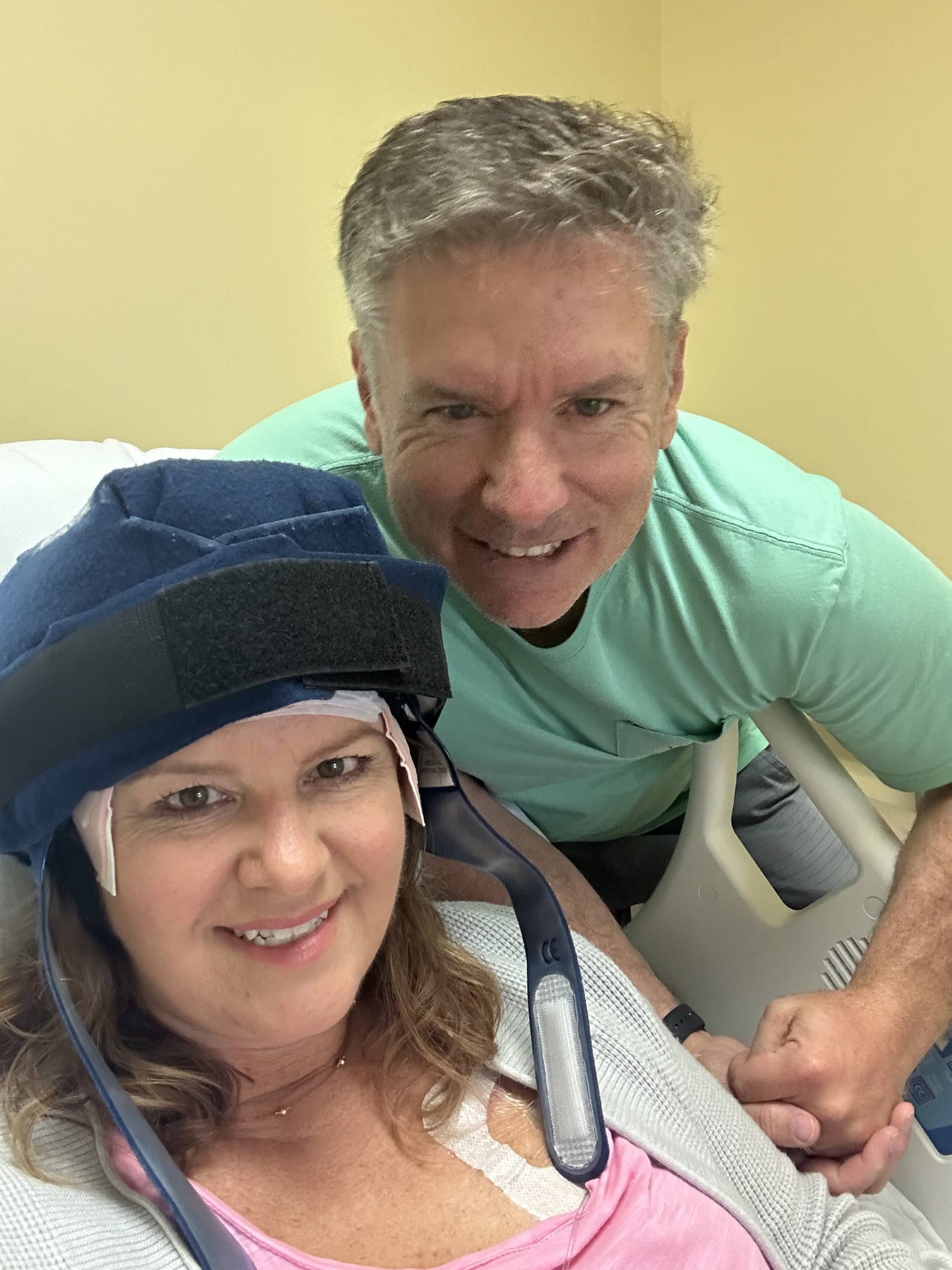
“Without a doubt, it helped preserve my mental health and move on with life after chemotherapy far more quickly than if I hadn’t cold capped.“
– Teresa
USA
Support every step of the way
Cold capping can feel daunting at first, but you don’t have to do it alone. Penguin offers training for yourself, a friend or family member to learn how to cap for you, or, if you’d prefer, you can hire a professional capper.
These trained professionals are often former Penguin users themselves, people who’ve successfully saved their own hair through chemotherapy and now support others going through the same journey. They’ll manage your timing, monitor temperatures, and take care of every detail so you can relax and focus on your treatment.
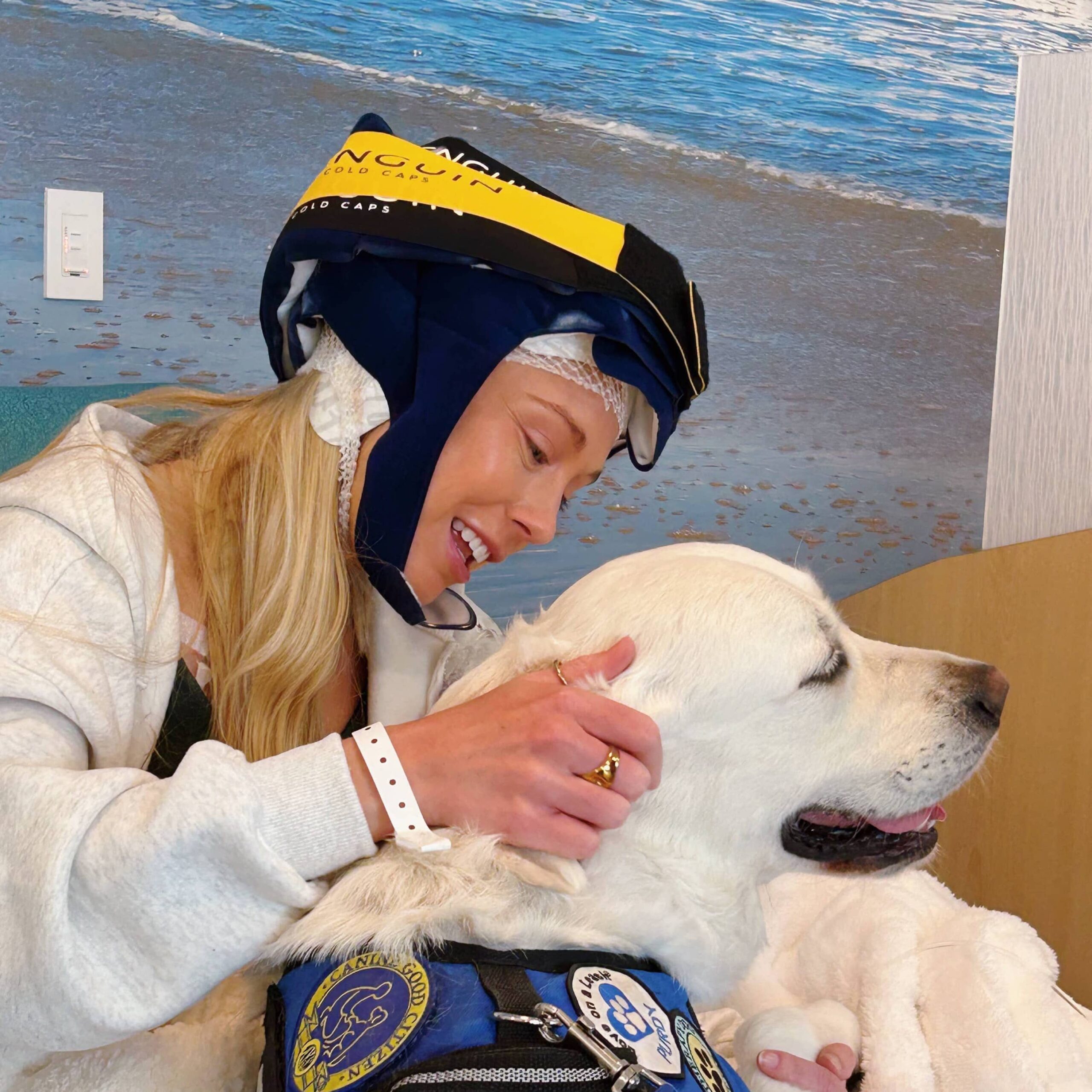
“Cancer takes away so much control. Saving my hair gave me back a bit of that.“
– Tanner
USA
Real people, Real results
The proof is in the lived experience. Penguin Cold Caps has thousands of verified success stories from people who’ve used manual cold capping through a wide range of chemotherapy regimens.
Below are just a few examples from Penguin users who achieved remarkable results:
These are not isolated success stories – they’re part of a consistent pattern. Penguin users typically retain between 70 % and 95 % of their hair, depending on the chemotherapy drugs used and how carefully the process is followed.
| Name | Location | Chemo Regimen | Self Reported Hair Retention | Quote |
| Rachel | Cleveland, Ohio | TCH (6 cycles) | 90 % | “Now, 26 weeks post-final chemo, I’m known at my clinic as ‘the girl that kept her hair.’” |
| Tanner | San Diego, USA | 6 rounds of TCHP | 80 – 85% | “Thanks to Penguin, I was able to feel like myself during treatment. Being able to keep my hair completely changed my entire chemo journey.” |
| Erica | Michigan, USA | 6 rounds of Docetaxel, Carboplatin, and Keytruda | 100% | “Saving my hair gave me the strength I needed to beat cancer with a great attitude. It gave me a sense of control in a world where I didn’t have any.” |
| Laura | USA | 12 weekly rounds of Taxol | 100% | “I was able to keep my femininity intact and maintain my professional appearance through treatment—no one would have known I was a cancer patient.” |
| Christie | Illinois, USA | Taxotere (TC) and Cytoxan | 80% | “I wanted my children to see me, not my cancer diagnosis. Cold capping helped me look and feel like myself during one of the hardest times of my life.” |
| Kathy | Idaho, USA | 12 weeks of Taxol and Herceptin | 80% | “I chose Penguin Cold Caps because I felt it was the most reliable in producing the desired results.” |
| Valeria | Virginia Beach, USA | Adriamycin, Cyclophosphamide (AC), and Paclitaxel (Taxol) | 90% | “I had long, thick hair, and the only hair I lost was behind my ears and the back of my neck, where it was harder for the caps to reach.” |
| Theresa | USA | Taxol & Herceptin | 95% | “I couldn’t be happier with my results. I hope I never have to do it again, but I absolutely would if I needed to” |
| Cameron | San Carlos, USA | Melphalan | 90% | “I hope that more multiple myeloma patients undergoing SCT treatment will consider cold capping. It’s a way to regain some sense of control over the process and maintain a positive outlook through the treatment.” |
Comfort and tolerability: More manageable than you might think
One of the first questions people ask about cold capping is, “But isn’t it unbearably cold?” It’s a fair question, after all, cooling your scalp to protect your hair follicles sounds intense.
In reality, most Penguin users describe the experience as surprisingly manageable, and far less uncomfortable than they expected.
The first few minutes can feel cold and tingly, but as your scalp numbs, the sensation fades. Many people say that once they settle in, it becomes just another part of the treatment routine.
________
“I found capping to be very manageable. It was very cold but never intolerable. In fact, capping was more tolerable than the ice placed on my hands and feet to help prevent neuropathy!”
— Teresa, USA (read Teresa’s story)
“Yes, the caps are cold, but they’re not intolerable and any discomfort I had was minimal and absolutely worth it to save my hair.”
— Liesl, USA (read Liesl’s story)
“The first few minutes were intense, but once the cold settled, it was okay. I just focused on warm thoughts and reminded myself why I was doing this.”
— Valeria, UK (read Valeria’s story)
Soft, lightweight, and comfortable
Contrary to some misconceptions, manual cold caps aren’t heavy or rigid. Penguin caps are soft, flexible, and filled with a specially formulated gel that makes them easy to mould to the contours of your scalp. Once fitted correctly, the cap feels snug and secure, not tight or cumbersome.
Many users comment on how the cap’s comfort and pliability make the process easier than expected. Unlike machine systems, which use a hard-shell helmet that must be tightly fastened to stay in contact, Penguin’s manual caps are designed to conform naturally to your head shape, ensuring full coverage without pressure points.
This close, comfortable fit not only makes the experience more pleasant, it’s one of the reasons Penguin Cold Caps achieve such consistent, even cooling and successful results.
Comfort in Practice
Because manual cold capping is flexible and portable, you can make yourself as comfortable as possible. Wrap up in a blanket, sip a warm drink, stretch, or even move around if you want to. You’re not restricted to sitting still in a clinic chair, as you are with a mechanical system.
Many Penguin users find this freedom makes the experience less clinical and more human, a moment shared with a loved one or professional capper who’s there to help.
________
“The cold wasn’t nearly as bad as I feared, especially with my capper beside me. We chatted, laughed, and the time flew by.”
— Marcia, USA (read Marcia’s story)
“Having someone who’d been through it themselves made all the difference. She knew what to say and when to just sit quietly — and she cared.”
— Sophie, Chicago (read Sophie’s story)
________
So yes, it’s cold. But for most people, it’s entirely tolerable, especially when balanced against what you gain: the chance to look in the mirror after treatment and still recognise yourself.
As many Penguin users will tell you, that feeling makes every chilly moment worth it.
What healthcare teams notice
Many oncologists and nurses are surprised by just how effective manual cold capping can be. Several Penguin users have shared that their medical teams were astonished by their results, and now recommend Penguin to new patients.
________
“I was the first person my medical team had seen that cold capped, and they were in awe. I am forever thankful for Penguin Cold Caps and would highly recommend them.”
– Marcia, USA (Read Marcia’s story)
“At the beginning, my oncologist told me that I probably wouldn’t keep my hair even if I capped. But I was able to give her an Alexis Rose hair flip at every post-chemo appointment. She was amazed, and so were the nurses.”
— Rachel, USA (read Rachel’s story)
________
These reactions highlight what studies alone can’t capture: the emotional impact of maintaining normalcy during a difficult time.
Dispelling the myths
Some claims suggest manual cold capping is outdated, unreliable, or difficult to manage. The experiences of thousands of Penguin users tell a different story.
- “It’s too hard to manage.”
Penguin’s training, guides, and support network make it straightforward. With a trained helper or capper, everything runs smoothly. - “Machine systems are more advanced.”
Machines are convenient but limited: they’re warmer, end too early, and can’t leave the clinic. Manual systems deliver colder, longer, and more complete protection. - “Results vary too much.”
With proper fit, timing, and consistent cooling, manual results are remarkably consistent, as the success stories show.
Cold capping isn’t about vanity. For many people, keeping their hair means keeping a sense of identity, dignity, and strength when everything else feels uncertain. The science is clear, and the stories are powerful: manual cold capping works — and it changes how people experience chemotherapy.
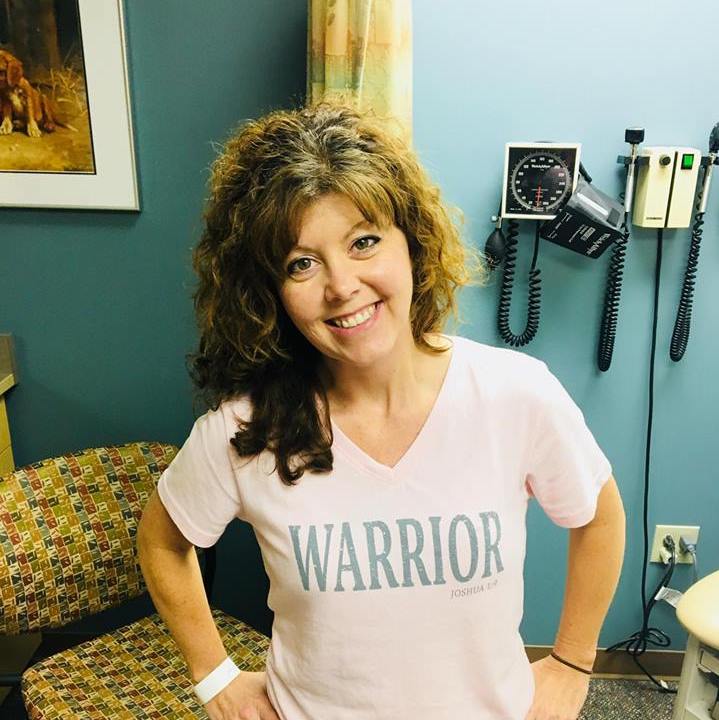
“You don’t need to justify your reasons for wanting to save your hair. Whatever your reasons, they’re valid.“
– Christie
USA
In summary
Manual cold capping gives you:
- Flexibility – you can move, go home, or rest while cooling continues.
- Control – you decide who helps and how long you cool for.
- Confidence – supported by real results and trained experts who’ve been there.
Whether you’re planning treatment, supporting a loved one, or just looking for reassurance, know this: you have options. And with the right support, Penguin Cold Caps can help you keep not only your hair, but also a piece of yourself.
Request a call back
Just complete the form below and rep near you will be in touch to answer all of your questions.