Could scalp cooling reduce persistent hair loss after chemotherapy? What new research tells us
Published: September 29, 2026

For many people undergoing chemotherapy, hair loss is one of the most visible and emotionally difficult side effects of treatment.
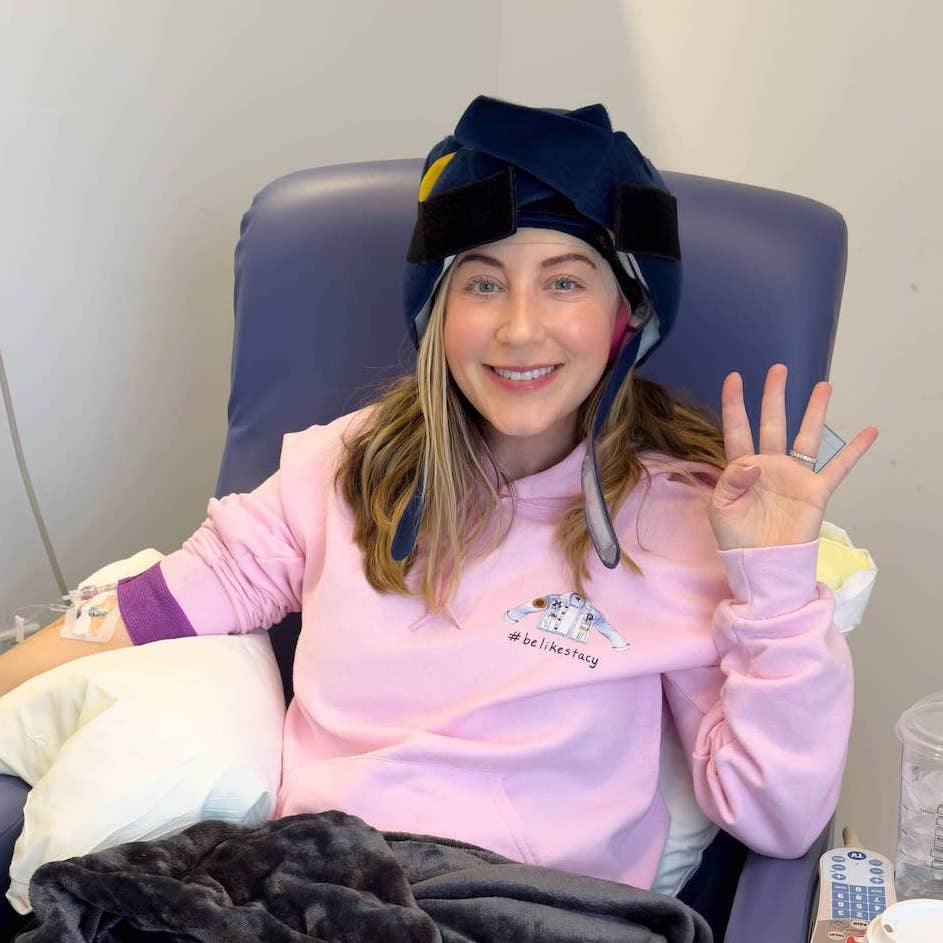
Scalp cooling, often known as cold capping, is already used to help reduce chemotherapy-induced hair loss while treatment is taking place. Research is now looking at whether scalp cooling may also affect how well hair recovers after chemotherapy.
A randomised controlled trial published in the Journal of Clinical Oncology found that people who used scalp cooling during chemotherapy were significantly less likely to experience persistent hair loss six months after completing their treatment.
The findings raise an important possibility: scalp cooling may not only help some people retain more of their hair during chemotherapy, but may also be linked with better hair recovery after treatment.
The study found less persistent alopecia and greater hair thickness six months after chemotherapy among patients who had used scalp cooling.
Hair loss doesn’t always end when chemotherapy does
For most people, chemotherapy-related hair loss is temporary.
Hair generally begins to regrow after treatment finishes, although it can initially be finer or have a different texture or color. According to Macmillan Cancer Support, around three to six months after treatment ends, most people will have a covering of short hair. By around 12 months, they should have a better indication of how thick their hair is likely to become.
However, this isn’t everyone’s experience.
For some people, hair remains noticeably thinner or does not fully recover within six months. This is often called persistent chemotherapy-induced alopecia, or PCIA. Persistent hair loss at six months is not necessarily the same as permanent hair loss.
Certain chemotherapy drugs and higher doses can be associated with longer-lasting damage to the hair follicles. Cancer Research UK explains that, while most people’s hair grows back after chemotherapy, recovery can depend on factors including the drugs used and their dosage. It also notes evidence that hair can take much longer to recover after some treatments, including docetaxel, and that permanent hair loss can occur in a small number of people.
Until relatively recently, most scalp-cooling research has concentrated on a much more immediate question: “How much hair can somebody retain during chemotherapy?”
Researchers are now beginning to ask another question: “Could scalp cooling also influence what happens to the hair months after chemotherapy has finished?”
A significant difference six months after treatment
A 2024 randomized controlled trial published in the Journal of Clinical Oncology investigated precisely this.
Researchers recruited patients with newly diagnosed stage I–III breast cancer who were receiving chemotherapy with curative intent. Participants were randomly allocated either to use scalp cooling during chemotherapy or to receive usual clinical care without scalp cooling.
The primary outcome was the incidence of persistent chemotherapy-induced alopecia six months after chemotherapy.
Among those who had used scalp cooling:
- 13.5% experienced persistent chemotherapy-induced alopecia.Among those who had not used scalp cooling:
- 52% experienced persistent chemotherapy-induced alopecia.
These figures relate to this specific group of breast cancer patients and should not be treated as expected results for every cancer type or chemotherapy regimen.
The results involved 89 patients in the scalp-cooling group and 50 in the control group at the six-month assessment.
Researchers measured more than visible hair loss
An important strength of the study is that researchers weren’t simply asking participants whether they felt their hair had recovered.
Researchers measured both hair thickness and hair density.
Six months after chemotherapy, the increase in hair thickness from baseline was, on average, 9 micrometres greater in the scalp-cooling group than in the control group.
Interestingly, the researchers did not find the same benefit in hair density. Their conclusion was that scalp cooling appeared primarily to reduce persistent alopecia by improving hair thickness and the quality of regrowth, rather than simply increasing the number of hairs.
They also stressed that further research is required to determine whether these benefits continue over the longer term.
“13.5% of patients using scalp cooling experienced persistent chemotherapy-induced alopecia six months after treatment, compared with 52% of those who didn’t use scalp cooling.“
Why might scalp cooling have a longer-term effect?
Scalp cooling works by lowering the temperature of the scalp.
This reduces blood flow to the area and therefore reduces the amount of chemotherapy reaching the hair follicles. Cooling is also thought to reduce activity within the follicles while chemotherapy drugs are circulating.
Lowering scalp temperature reduces blood flow and the amount of chemotherapy reaching the follicles, which can make hair less likely to fall out.
This is the main reason scalp cooling can help some people retain more hair during treatment. But the latest findings raise another possibility.
One possible explanation is that reducing chemotherapy exposure in the scalp may limit some damage to hair follicles. However, the 2024 trial did not directly test or prove this mechanism.
That would be consistent with the study’s finding that patients who had used scalp cooling had thicker hair six months after completing chemotherapy.
Keeping your hair during chemotherapy may not be the whole story
The research suggests that scalp-cooling outcomes may need to be viewed more broadly than hair retention during treatment alone.
People understandably tend to judge cold capping by what they can see while undergoing chemotherapy.
- Did I lose my hair?
- How much did I retain?
- Did I need to wear a wig or other head covering?
Those are important outcomes.
But this study suggests that hair recovery after treatment may also be an important outcome to consider.
This doesn’t mean that somebody who loses a significant amount of hair while cold capping will necessarily experience better regrowth later. The research isn’t yet detailed enough to make that claim.
However, it does suggest that the percentage of hair retained during chemotherapy may not be the only meaningful measure of scalp cooling’s effectiveness.
Hair recovery varies between people
No scalp-cooling method can guarantee hair retention or recovery.
The degree of chemotherapy-related hair loss varies according to the chemotherapy drug or combination of drugs being used, dosage and individual response. Some chemotherapy drugs cause little or no hair loss, while others can cause partial thinning or complete alopecia.
Similarly, scalp cooling does not work equally well for every chemotherapy regimen or every individual.
Anyone considering scalp cooling should therefore discuss it with their oncology team and the Penguin Cold Caps team, both to establish whether it is appropriate for their treatment and to understand what outcomes might realistically be expected.
NEED TO DISCUSS YOUR REGIMEN?
Request a Callback
If your medical team has confirmed that cold capping is suitable, your local Penguin representative can explain how Penguin Cold Caps work and what to expect.
Persistent hair loss can have a lasting emotional impact
Hair loss during cancer treatment is sometimes regarded primarily as a cosmetic side effect. For many patients, its impact goes much deeper.
Hair loss can make cancer treatment immediately visible to other people. It can affect privacy, confidence, body image and someone’s sense of identity at a time when they’re already dealing with significant physical and emotional pressures.
When hair fails to recover as expected after chemotherapy, those effects may continue long after active treatment has finished.
The 2024 trial investigated this as well.
Researchers used a chemotherapy-induced alopecia distress scale to assess participants’ experiences. Six months after treatment, the scalp-cooling group showed lower levels of hair-loss-related distress than the control group.
The average difference in the change in distress score was 3.2 points in favor of the scalp-cooling group.
This reinforces an important point: supportive cancer care isn’t simply about getting someone through chemotherapy. Where possible, it’s also about reducing the longer-term physical and emotional consequences of treatment.
Does scalp cooling prevent permanent hair loss?
The study does not prove that. However, the study is important because it was a randomized controlled trial, providing stronger evidence than an observational study or collection of patient experiences.
But – there are important limitations.
The study involved people with stage 1 to 3 breast cancer, so its results cannot automatically be applied to every cancer or chemotherapy regimen.
The main follow-up point was six months after chemotherapy. Six months is long enough to identify delayed recovery and persistent alopecia, but it isn’t the same as proving that scalp cooling prevents permanent hair loss over several years.
The researchers therefore concluded that further research is required to investigate the longer-term benefits.
That means it would be premature to say that cold capping prevents permanent chemotherapy-related hair loss.
For a broader explanation of permanent hair loss after chemotherapy, see our existing guide: Does cold capping reduce the risk of permanent hair loss after chemo?
What the study does provide is encouraging evidence that its potential benefits could extend beyond reducing hair loss while chemotherapy is actually taking place.
What does this research mean if you are considering cold capping?
For decades, cold capping has primarily been discussed as a way of trying to preserve hair during chemotherapy.
This study suggests scalp cooling may be associated with better hair recovery as well as hair loss during chemotherapy.
The study found less persistent alopecia and greater hair thickness six months after chemotherapy among patients who had used scalp cooling. Longer-term research is still needed.
The finding that 13.5% of patients using scalp cooling experienced persistent chemotherapy-induced alopecia six months after treatment, compared with 52% of those who didn’t use scalp cooling, adds important evidence to this developing area of research.
It doesn’t mean scalp cooling can guarantee that hair will be preserved or completely recover.
But it does suggest that the question may no longer simply be whether or not cold capping can help retain hair during chemotherapy?” It may also be worth asking whether scalp cooling could influence how well hair recovers in the months after treatment.
Frequently asked questions
What is persistent chemotherapy-induced alopecia?
Persistent chemotherapy-induced alopecia, or PCIA, describes hair that has not fully recovered within six months or more after chemotherapy. It is not necessarily the same as permanent hair loss.
Is persistent hair loss the same as permanent hair loss?
No. Hair that has not fully recovered six months after chemotherapy may continue to improve over time. The 2024 study assessed patients at six months, so it cannot tell us whether the same differences remain several years later.
Can scalp cooling help hair grow back after chemotherapy?
The 2024 trial found less persistent alopecia and greater hair thickness at six months among breast cancer patients who had used scalp cooling. However, the study did not prove that scalp cooling directly causes better regrowth.
Does cold capping prevent permanent hair loss?
The evidence does not show that scalp cooling can guarantee prevention of permanent hair loss. Current research suggests it may help reduce persistent hair loss in some patients, but longer-term studies are still needed.
Does scalp cooling work with every chemotherapy regimen?
No. Results vary according to the chemotherapy drugs, dose, treatment schedule and individual response. Your clinical team can advise whether scalp cooling is suitable for your treatment.
How long does it take for hair to grow back after chemotherapy?
Hair often starts to regrow after treatment finishes, but recovery varies. Most people develop some short hair within three to six months, although fuller regrowth can take longer.
Sources
Kang D, Cho J, Zhao D et al. Scalp Cooling in Preventing Persistent Chemotherapy-Induced Alopecia: A Randomized Controlled Trial. Journal of Clinical Oncology. 2024;42(26):3115–3122. Read the study
PubMed. Scalp Cooling in Preventing Persistent Chemotherapy-Induced Alopecia: A Randomized Controlled Trial. View the PubMed record
Cancer Research UK. Hair loss and hair thinning from cancer drugs. Read the guidance
Cancer Research UK. About hair loss and thinning due to cancer treatment. Read the guidance
Macmillan Cancer Support. Hair loss during treatment. Read the guidance